 Swiftlisted
Profit After Marketplace Fees: How to Calculate What You Actually Keep
A notification confirming a sale brings immediate satisfaction, but the figure displayed in your sold alert is rarely what reaches your bank account. Between platform commissions, payment processing charges, mandatory tax adjustments, postage costs, and the original purchase price of your inventory, calculating true net profit requires looking well beyond gross revenue. Understanding every deduction allows you to price items accurately, protect your margins, and choose the most profitable selling channels for your stock.
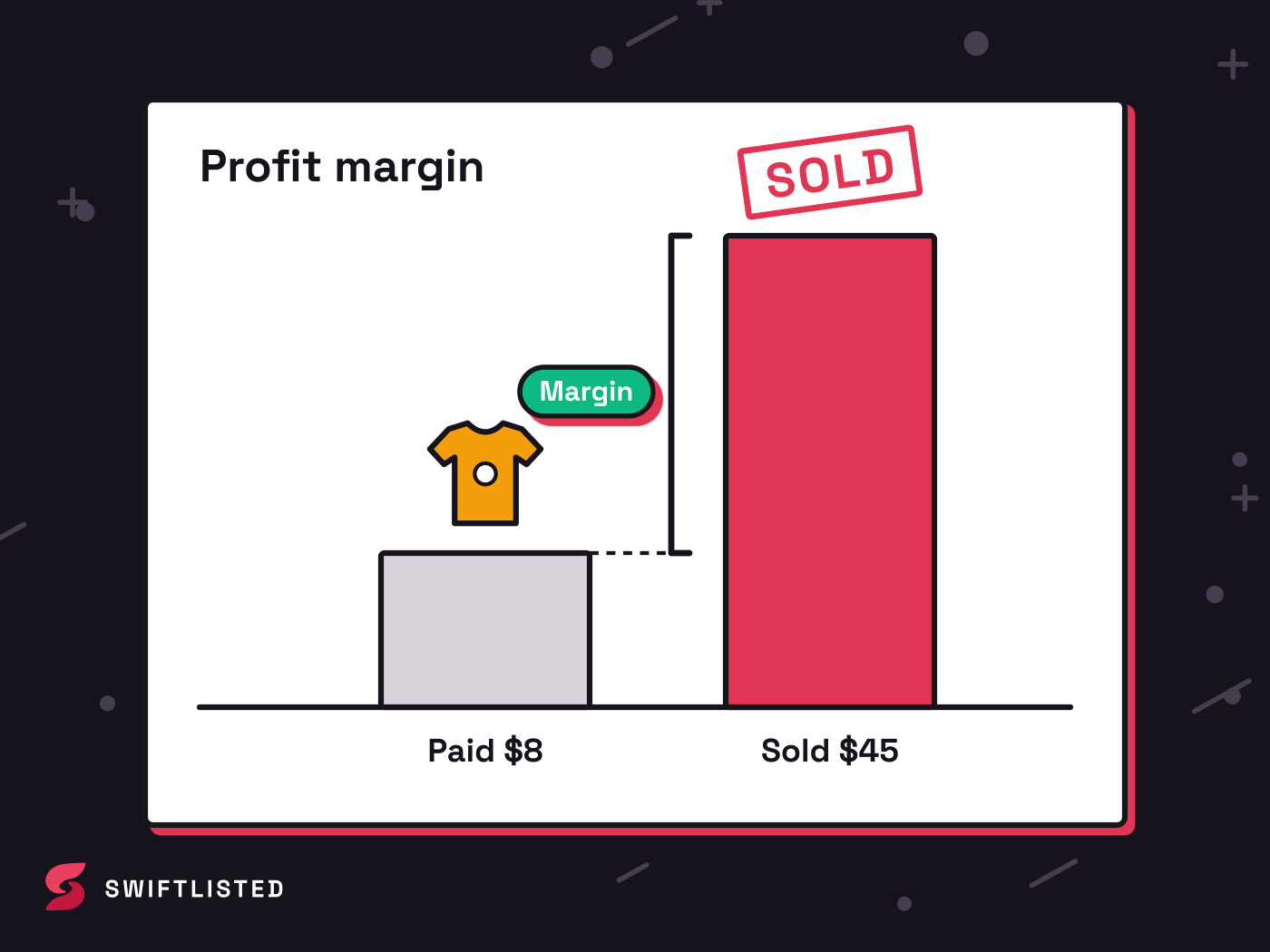
The Four Layers of Net Reseller Profit
To determine what you actually keep from a sale, you must break down the transaction into four distinct layers: the gross sale price, marketplace fees, fulfilment costs, and your original cost of goods.
Gross revenue represents the full amount the buyer pays, which may include the item price, shipping fees, and sales taxes depending on the venue. From this gross total, marketplaces subtract their various platform fees. Next come fulfilment costs, such as purchasing postage labels or packaging materials. Finally, subtracting what you originally paid to acquire the item reveals your true net profit.
- Gross Sale Price: The total amount paid by the buyer during checkout.
- Marketplace Deductions: Platform selling fees, payment processing fees, regional regulatory charges, and tax on fees.
- Fulfilment Costs: The direct expense of postage labels, delivery upgrades, and packaging materials.
- Cost of Goods: The original purchase price paid to acquire the item.
How Marketplace Fee Structures Vary Across Platforms
Marketplace fee structures differ significantly depending on who pays each fee, what the fee is charged on, and where the sale takes place. Some venues charge the seller a commission based on the whole order value including shipping and taxes, while others assess fees solely on the item price.
On platforms such as Vinted, Poshmark, and Vestiaire Collective, the buyer buys the shipping label directly from the marketplace, meaning sellers incur no fee on postage. On Vinted, sellers pay no listing or selling fees at all, as the platform charges a buyer protection fee directly to the buyer instead. Similarly, marketplaces like Depop, Mercari, and eBay charge buyer protection or marketplace fees to buyers in certain regions, while assessing seller fees on item prices, shipping, or payment processing in others.
For platforms like eBay, Etsy, Grailed, Whatnot, Facebook Marketplace, and Shopify, seller fees can include final value commissions, transaction fees, fixed per-order costs, payment processing, regulatory operating fees, and regional tax charges such as VAT or GST applied to the fees themselves. Because fee rules vary by category, seller type, and country, sellers should consult each platform's fee pages or rely on dedicated fee calculation tools.
Step-by-Step Worked Examples in Words
Working out your net return without software involves following a clear order of deduction. Consider a scenario where you fulfil shipping yourself. Start with the buyer's total payment for the item and shipping. Subtract the platform's commission, which may apply to both the item price and the shipping amount. Next, subtract any fixed per-order payment processing charge and regional regulatory fees. Subtract the exact cost of purchasing the shipping label from your carrier, and finally subtract your initial acquisition cost. What remains is your net profit.
Now consider a scenario where the buyer purchases a pre-paid shipping label directly from the marketplace, as seen on platforms like Poshmark or Vestiaire Collective. Start with the agreed item sale price. Subtract the platform selling fee and payment processing fee, both charged on the item price alone. Subtract any applicable tax charged on those platform fees. Finally, subtract what you paid to buy the item. Because postage was handled directly by the buyer through the platform, no shipping expense is deducted from your balance.

Using a Dedicated Fee Calculator to Compare Margins
Calculating multi-tiered fee structures by hand for every item is time-consuming and prone to manual error, especially when selling across several countries and channels. Swiftlisted provides a free fee calculator for each supported marketplace, including eBay, Depop, Vinted, Grailed, Vestiaire Collective, Poshmark, Mercari, Whatnot, Facebook Marketplace, Etsy, and Shopify.
Each fee calculator includes dedicated buttons for supported countries. By entering your planned sale price, shipping costs, and item acquisition cost, the tool displays an itemised breakdown of every fee alongside your final take-home payout. Swiftlisted also offers a central comparison fee calculator page that evaluates the exact same sale across every marketplace in your region simultaneously, pulling up-to-date fee definitions directly from official help documentation.
When you crosslist inventory across multiple platforms, knowing your precise net payout on each marketplace helps you set tailored prices or choose where to list specific items. Managing your inventory through a desktop tool makes it easy to maintain listings on venues with lower fees while keeping stock synchronised everywhere.
Actionable Checks to Protect Your Bottom Line Today
Protecting your resale profit margins requires active monitoring of your inventory costs and platform expenses before placing items up for sale.
- Record your exact acquisition cost for every item at the moment of purchase.
- Run your intended sale price through a fee calculator before listing to confirm acceptable profit margins.
- Account for regional tax charges on platform fees, such as VAT or GST, which reduce net payout in certain countries.
- Factor in packaging materials alongside postage costs when calculating total fulfilment expenses.
- Crosslist high-margin stock to venues with lower seller commissions to maximise your net return.
Common questions
- How do buyer-paid fees impact reseller profit?
- When a marketplace charges buyer protection or marketplace fees to the buyer, the seller retains a larger portion of the item price because platform fees are shifted away from the seller's balance, though buyers may factor the extra checkout cost into their offers.
- Do marketplace fees apply to shipping charges?
- It depends on the platform and region. Some marketplaces charge commission on the total order including shipping, while platforms where the buyer buys shipping labels directly from the marketplace do not charge seller fees on postage.
- How can I compare net profit across multiple sales channels?
- You can use Swiftlisted's comparison fee calculator to enter your sale price, shipping cost, and item cost, showing you the exact take-home payout for every marketplace in your country side by side.
- Why do fee deductions vary by country for the same marketplace?
- Marketplaces adapt their fee models to local financial regulations, tax laws such as VAT or GST on services, payment processor rates, and buyer protection requirements in each specific region.
Run the numbers on your sale
Free fee calculators for 11 marketplaces, by country: every fee, and what you keep.
Open the fee calculators