 Swiftlisted
Do Marketplaces Charge Fees on Shipping? A Reseller Guide
When you charge a buyer for postage on an online marketplace, you might expect every penny of that shipping money to go directly toward delivering the parcel. On many major selling platforms, however, marketplace fees apply to the entire total paid by the buyer—including postage and applicable sales taxes. Understanding which platforms charge fees on shipping, which leave postage untouched, and how regional rules differ is essential for setting profitable prices across all your listings.
How Marketplace Shipping Fees Work
When a buyer pays for an item and shipping, selling platforms handle fees in one of three main ways. Some platforms calculate seller fees on the whole order value, which encompasses the item price, shipping, and any sales tax collected. Other platforms calculate their main commission purely on the item price, while still applying payment processing fees across the entire order total.
A third category uses standard prepaid shipping labels. On these platforms, the buyer purchases the shipping label directly from the marketplace, meaning no postage money passes through the seller's hands and no seller fees are deducted from shipping. Because fee structures depend heavily on your region, seller status, and opted-in features, exact calculations vary. You should always check a marketplace's own fee page or use a dedicated fee calculator to verify current rules.
Marketplaces That Charge Fees on Shipping
On several major platforms, seller fees are explicitly charged on shipping. On Etsy, for instance, sellers pay a transaction fee that is charged on both the item price and the shipping amount paid by the buyer, alongside payment processing fees calculated on the whole order. Etsy sellers in certain countries may also incur regulatory operating fees or tax on fees, which are similarly charged on the item price and shipping.
On eBay, fee structures depend on the region. In regions such as the United States, Australia, and Canada, the final value fee and per-order fee are charged on the whole order, including item price, shipping, and sales tax. In the United Kingdom and Germany, eBay charges a per-order fee on the item price plus shipping, as well as regulatory operating fees on postage where applicable.
Other platforms follow comparable rules. Mercari charges its selling fee and buyer protection fee on the item price and shipping combined. On Facebook Marketplace and Shopify, payment processing and selling fees are assessed on the total order value. Platforms like Depop, Grailed, and Whatnot also apply payment processing or transaction fees to shipping in many regions, though specific commission rules depend on whether you opt into extra features such as boosted listings.
Platforms Where Shipping is Excluded from Fees
If you want to avoid paying seller fees on shipping, platforms that rely on buyer-purchased labels offer a clear advantage. On Vinted, Vestiaire Collective, and Poshmark, buyers purchase their shipping labels directly through the marketplace. Because the buyer pays for postage separately, the seller pays no selling fees or payment processing cuts on shipping.
On Vinted, the buyer pays a protection fee calculated on the item price only, and the seller pays no selling fee across all supported countries. Vestiaire Collective calculates both its selling fee and payment processing fee strictly on the item price. Similarly, Poshmark bases its primary selling fee purely on the item price, leaving shipping entirely separate.
Worked Example: How Postage Fees Impact Your Profit
To see how shipping fees alter your take-home amount, consider a practical scenario. Suppose you sell a pair of shoes where you pay a wholesale cost for the inventory and pay a set rate at the post office for delivery. If you price the shoes on a platform that calculates fees on the whole order, the fee is taken from the combined sum of the shoe price, shipping, and tax.
If you do not factor shipping into your fee calculations, the cut taken from the shipping portion effectively comes out of your item profit. If you list the same item on a platform where the buyer buys the shipping label directly, fees are charged only on the shoe price, leaving your shipping budget intact.
Because rates and formulas vary by country, calculating your exact margin by hand for every item across multiple platforms can quickly become overwhelming. Using a free fee calculator allows you to enter your item cost, listing price, and postage cost to see your exact take-home profit for each region. You can use an individual fee calculator for a single marketplace, or use a comparison fee calculator page to run the same sale through every marketplace simultaneously.
Protecting Your Margins When You Crosslist
Because different marketplaces deduct fees differently, pricing every item identically across all platforms can shrink your profit margins on high-shipping items. The most effective strategy for multi-channel sellers is to crosslist inventory while adjusting prices to match each platform's fee structure.
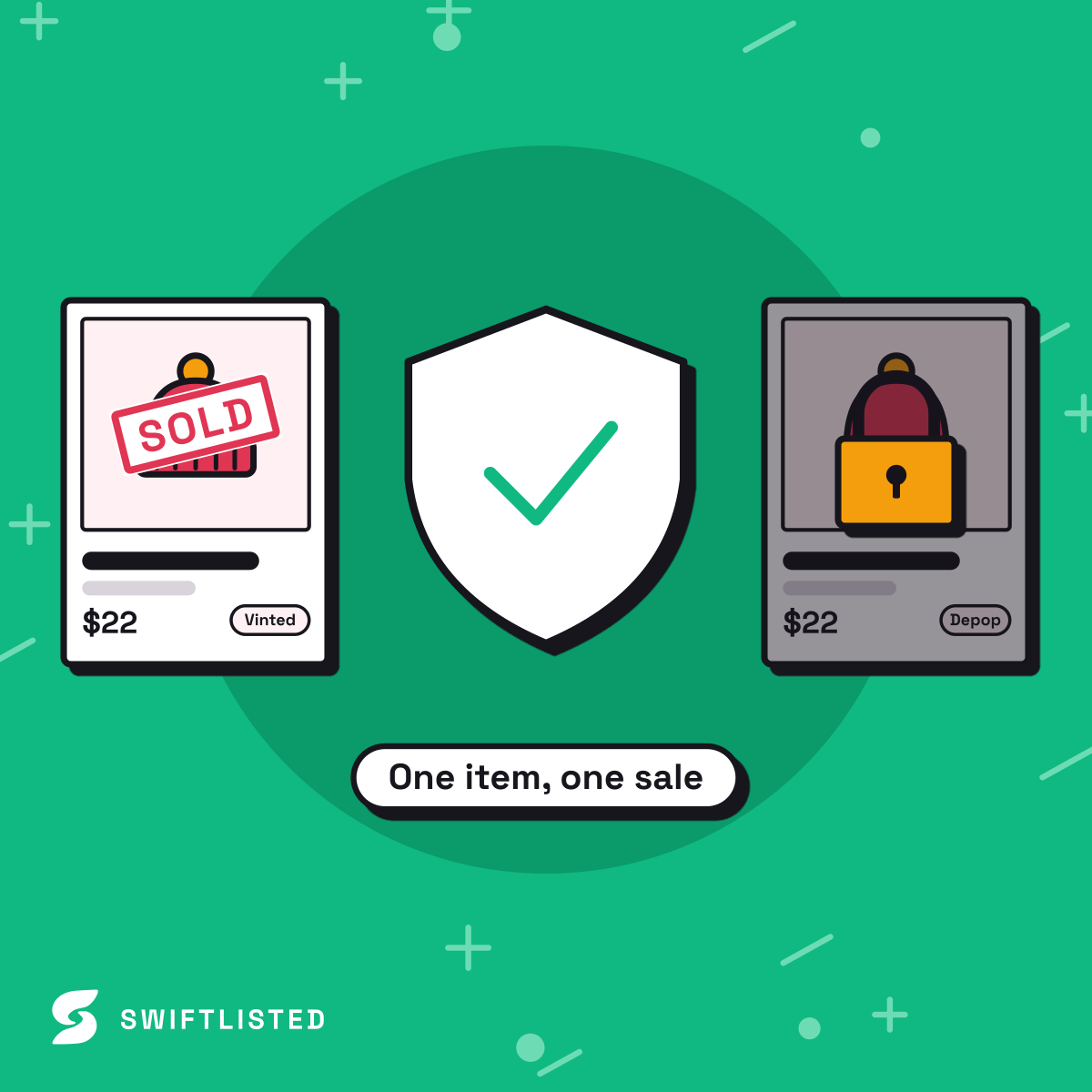
Using a crosslisting tool like Swiftlisted makes it easy to manage your inventory across multiple sales channels. With Swiftlisted, you can crosslist items to Depop, Vinted, Grailed, eBay, Etsy, Shopify, Whatnot, Vestiaire Collective, and Facebook Marketplace from a single dashboard on your desktop or laptop computer using the Chrome extension. Swiftlisted allows you to set custom prices per marketplace, ensuring your margins stay protected regardless of whether a platform takes a cut of shipping. Furthermore, when an item sells on one platform, Swiftlisted automatically delists it everywhere else to prevent double-selling.
Common questions
- Why do marketplaces charge fees on shipping?
- Platforms charge fees on shipping to prevent sellers from avoiding listing fees by underpricing items and inflating postage costs. Taking a fee on the total order amount also covers payment processing costs for the entire transaction.
- Does eBay take a cut of shipping costs?
- In many regions, eBay calculates its final value fee and per-order fee on the complete order total, which includes the item price, shipping charged to the buyer, and sales tax. In other regions, fees apply to the combined item and postage price. Check eBay's own fee page or use a fee calculator for current regional rules.
- How can I calculate my exact profit after shipping fees?
- Subtract your item purchase price, actual postage cost, and all marketplace fees from the total amount paid by the buyer. To save time, you can use Swiftlisted's free fee calculator tools to compute your net payout instantly for any country.
- Can I adjust my prices on different marketplaces when crosslisting?
- Yes. When you crosslist your items using Swiftlisted, you can set marketplace-specific prices to compensate for platforms that deduct fees from shipping charges, ensuring your profit margins remain consistent.
Run the numbers on your sale
Free fee calculators for 11 marketplaces, by country: every fee, and what you keep.
Open the fee calculators