 Swiftlisted
Boosts and Promoted Listings: Counting Advertising in Your Fees
Paying extra to promote or boost a listing can help move inventory faster, but advertising charges add another layer of expense to your sales. To decide if promoted listing fees are worth it, you must understand how these charges are structured, who pays them, and what portion of the transaction they apply to. By evaluating advertising costs alongside standard marketplace fees, you can protect your profit margins and choose the right strategy for your reselling business.
How Paid Promotion and Boost Fees Are Structured
Marketplace advertising programs generally work by charging sellers an additional fee when an item sells through a boosted or promoted placement. However, the exact rules governing where these charges apply depend heavily on the platform and region.
On Depop, for instance, a boosted listing fee is paid by the seller. Depending on the country, this fee is charged either on the item price only or on the combined total of the item price and the shipping the buyer pays. On Etsy, an Offsite Ads fee is charged to the seller on both the item price and the shipping paid by the buyer, depending on seller type and opt-in status. On platforms like eBay, promotional charges stack on top of standard final value fees, which vary based on category, seller type, and region.
Because rules differ between platforms and change over time, always check the marketplace's own fee page to confirm current policy details. To see how these charges affect your net income for a specific item, you can enter your figures into a dedicated fee calculator.
Factoring Advertising into Base Marketplace Fees
Promotional charges never exist in a vacuum; they sit directly on top of base marketplace fees. Understanding how standard transaction fees work is essential before deciding to pay for extra reach.
Different platforms distribute fees between buyers and sellers in distinct ways:
When calculating total selling expenses, remember that standard seller fees, payment processing costs, and applicable taxes are deducted alongside any promotional surcharges. Using a fee calculator for each marketplace allows you to view the cumulative impact of all fees before pricing your item.
- eBay: In regions like the United States, Australia, and Canada, sellers pay a final value fee and a per-order fee on the whole order, including item, shipping, and sales tax. In the United Kingdom, sellers pay fees on the item price and shipping, plus regulatory operating fees and tax on fees, while buyers in some regions pay a Buyer Protection fee.
- Depop: Sellers may pay payment processing fees on the whole order or on the item and shipping total, while buyers in regions like the United States, United Kingdom, and Australia pay a marketplace fee on the item price.
- Vinted: Sellers pay no listing or selling fees, while buyers pay a mandatory protection fee on the item price.
- Mercari: Sellers pay a selling fee on the item price and shipping, while buyers pay a protection fee.
- Poshmark: Sellers pay a flat fee structure on the item price, along with potential regional taxes or shipping discount costs.
- Etsy: Sellers pay a fixed listing fee, transaction fees on the item price and shipping, payment processing on the whole order, and regulatory or tax fees where applicable.
Step-by-Step: Deciding If Promoted Listings Are Worth It
To determine whether paying for boosts or promoted listings makes financial sense for your inventory, follow this step-by-step assessment process in your daily workflow.
First, determine your baseline acquisition cost, packaging expenses, and standard shipping fees. Second, run your target selling price through a fee calculator to establish your base profit margin without any promotional add-ons.
Third, review the promotion terms for that specific marketplace. Identify whether the ad fee applies solely to the item price or extends to the shipping amount paid by the buyer. Add this estimated ad cost to your standard fee total.
Fourth, compare your net profit margin with your inventory velocity. If boosting an item reduces your profit per unit but cuts your holding time significantly, the boost may be worthwhile. Accelerating sales allows you to reinvest your capital into fresh stock faster. Conversely, if an item already enjoys strong organic search demand, paying an ad fee simply shrinks your profit without adding value.
Organic Reach vs Paid Promotion: The Crosslisting Alternative
Paying marketplaces extra money for visibility is not the only way to speed up sales. Many resellers find that crosslisting inventory across multiple platforms provides greater organic exposure without the need to pay advertising surcharges.
Instead of paying a boost fee to reach buyers on a single channel, listing the same item on several platforms puts your product in front of distinct buyer audiences simultaneously. A crosslisting tool like Swiftlisted helps you manage this process efficiently. You photograph an item once, allow AI to generate titles, descriptions, categories, and attributes, review the draft in your stockroom, and post it across supported channels.
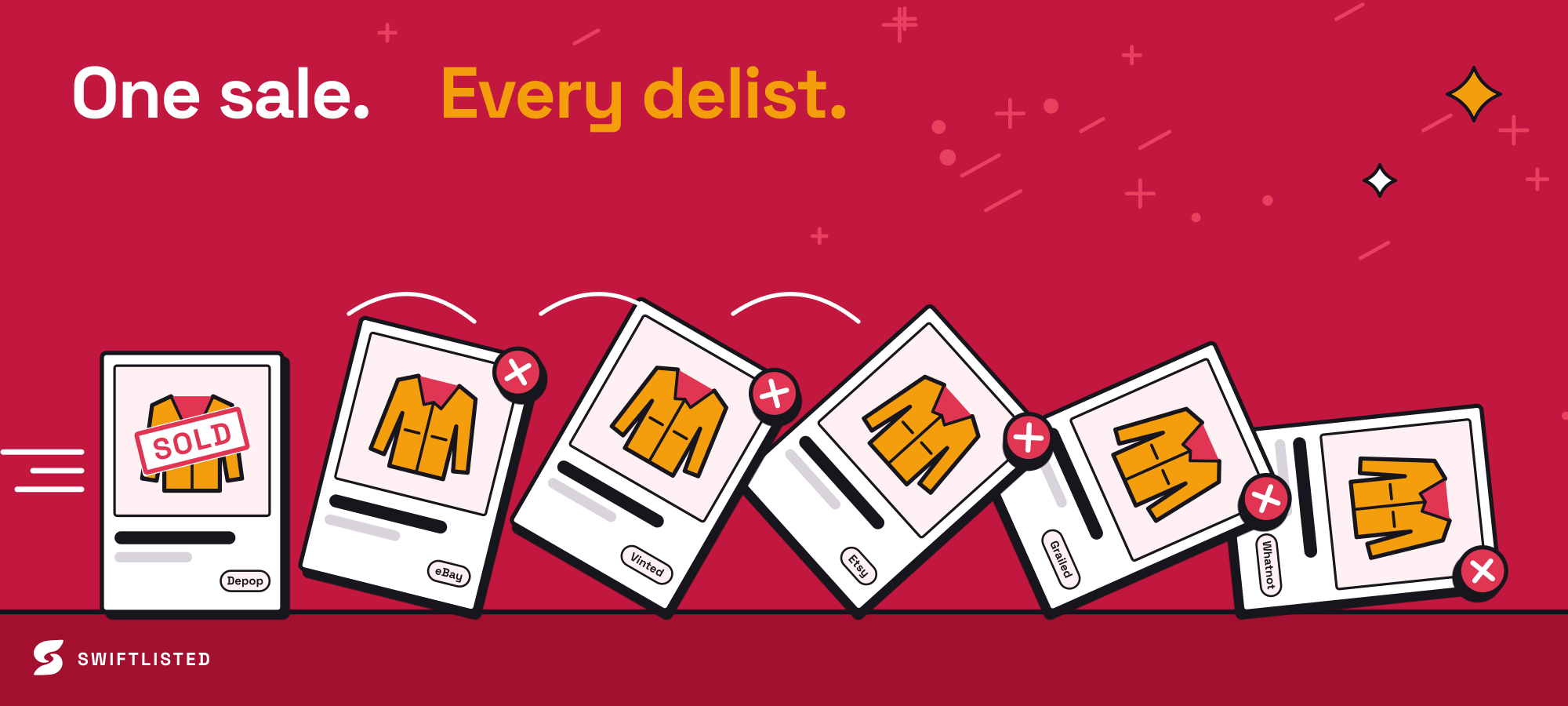
Swiftlisted supports listing to Depop, Vinted, Grailed, eBay, Etsy, Shopify, Vestiaire Collective, Whatnot, and Facebook Marketplace. Official integrations with eBay, Etsy, and Shopify connect directly, while desktop extension automation manages listings for other supported channels. When an item sells on one platform, background sold detection marks the item sold and removes it from other channels to prevent double sales.
Practical Checklist Before Boosting an Item
Before opting in to paid promotion on any marketplace, run through these quick checks to ensure your listings remain profitable:
- Verify advertising rules and structures on the marketplace's own fee page.
- Plug your item cost and listing price into a fee calculator to see exact net earnings before and after advertising fees.
- Optimise your title, tags, and photos first to maximize organic search visibility before turning on paid boosts.
- Reserve paid promotion for high-margin items or aged inventory that needs a boost in turn speed.
- Consider crosslisting your item across multiple platforms to test organic demand across different buyer bases.
Common questions
- Are boosted listing fees calculated on shipping costs?
- It depends on the platform and region. On Depop and Etsy, certain promotional or ad fees apply to both the item price and the buyer-paid shipping total. On other channels, fees apply only to the item price. Check the marketplace's own fee page or use a fee calculator to verify current terms.
- How can I figure out my net profit after promotional fees?
- Calculate your total item cost and postage, add up all standard platform fees, and add the advertising charge. Inputting these figures into a free fee calculator gives you an exact picture of your final payout.
- Can crosslisting replace paid listing boosts?
- For many resellers, yes. Crosslisting expands your reach across multiple buyer audiences organically, which often increases sales speed without requiring ongoing ad fee payments on a single platform.
- How does Swiftlisted help manage multi-platform selling?
- Swiftlisted turns your photos into complete listing drafts using AI, allows you to crosslist inventory to multiple marketplaces via desktop automation or direct connections, and automatically delists items once sold.
Run the numbers on your sale
Free fee calculators for 11 marketplaces, by country: every fee, and what you keep.
Open the fee calculators