 Swiftlisted
Crosslisting Mistakes That Cost Resellers Sales
Most crosslisting mistakes are not about the tool. They are about the same item being listed inconsistently across marketplaces, sold twice, left live after it has gone, or posted in a way one marketplace quietly punishes. The fixes are mostly habits you can start today, and they matter more the more marketplaces you sell on.
Listing the same item with different details everywhere
The most common mistake is writing a separate listing for each marketplace by hand, so the title, size, condition and price drift apart. A buyer who sees a size 10 on one shop and a size 9 on another has no reason to trust either, and you end up answering questions instead of selling.
Keep one master record for each item and treat each marketplace as a copy of it. Fix the facts once: brand, size, measurements, condition, defects. Then adjust only what the marketplace genuinely needs, such as its own category name or its own price for that shop.
- Write the condition and any flaw in one place and copy it, rather than re-describing it per shop.
- Check the size on the tag against the size field, not against your memory of the item.
- Use the same photos everywhere so you can tell at a glance which items are which.
Crosslisting without a plan for the sale
Listing to five marketplaces is only half the job. The expensive mistake is not noticing the sale. If the item is still live on three other shops after it has sold, you risk selling it again, then cancelling an order, which damages your standing on the marketplace that matters to you.
Decide before you list how you will find out a sale has happened. A tool that watches your shops and delists the rest is one option. Checking each shop manually at the end of each day is another. Whichever you choose, the check has to happen on a schedule you can actually keep.
- Know which marketplaces will tell you about a sale straight away and which only show it when you next look.
- Never assume a listing that has gone missing was sold. Confirm it.
- After any sale, delist the item everywhere else before you pack it.
Ignoring what each marketplace is for
Marketplaces differ in audience, in the categories they use, in how they handle sizes and in how they treat new listings. Depop and Vinted buyers, for example, search and browse differently, and a category that is exact on one may be a loose fit on another. Grailed and eBay reward very specific brand and size data. Etsy listings are judged on different signals again, and vintage or handmade framing that works there can read as noise elsewhere.
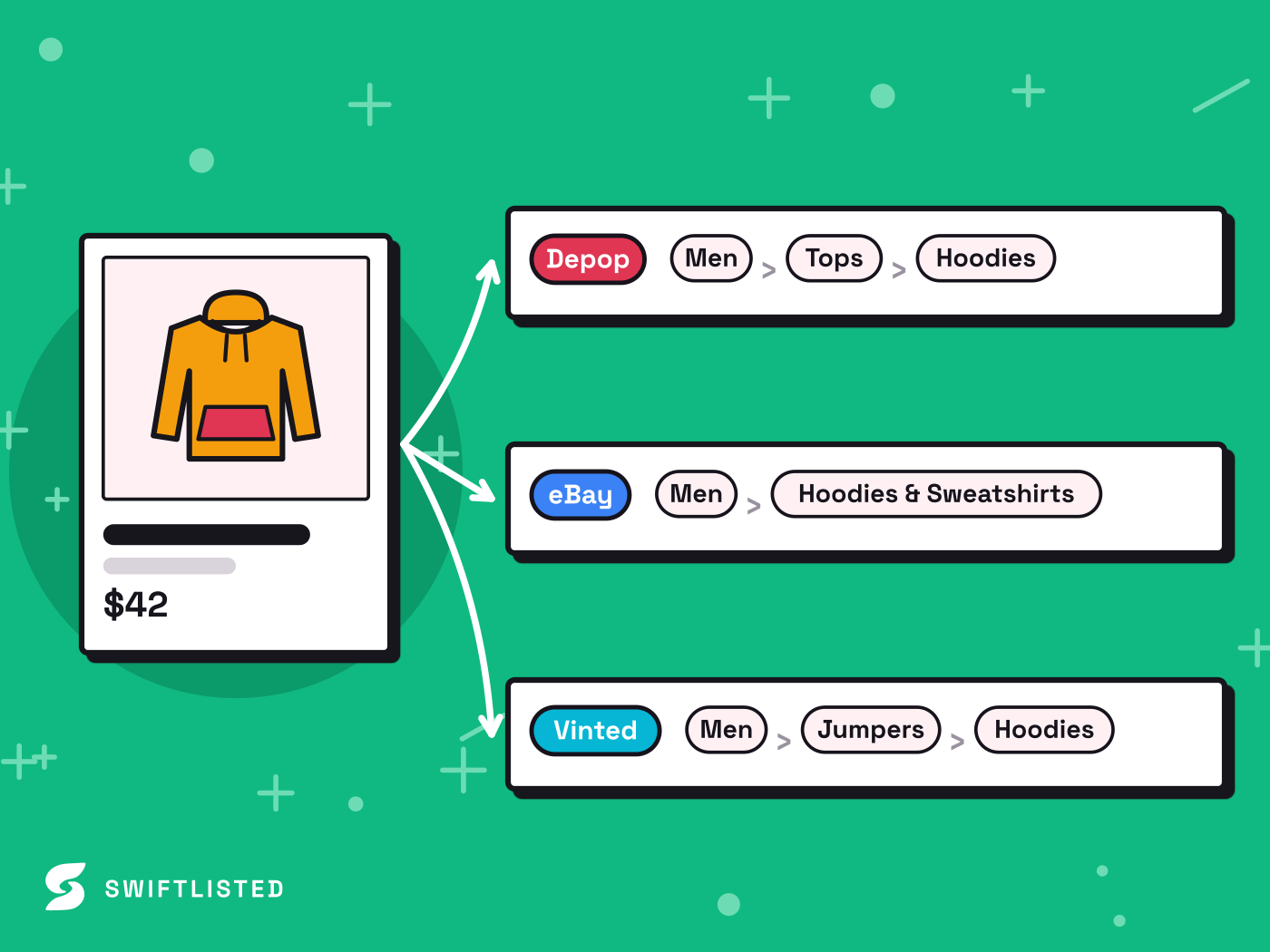
So do not paste one description everywhere. Check the category on each marketplace, make sure the size is in the form that marketplace expects, and write the opening line for the buyer who actually shops there. The marketplace's own help pages describe its current expectations, and these change, so check them rather than relying on what worked last year.
- Pick the category on each marketplace yourself at least once, so you know where your items land.
- Re-check size formats, since footwear and clothing sizing differ by marketplace and region.
- Adjust the first line of the description to the way buyers on that marketplace search.
Relisting everything in the same way
Refreshing stale listings can help a listing reappear in buyers' feeds, but it is not free. Some marketplaces treat a new listing differently from an old one, and some penalise a deleted-and-reposted item. Blindly relisting every quiet item on every shop can throw away the listing age you have built, and on some platforms it can cause a duplicate flag.
Relist deliberately. Sort your stock by age, look at what has been quiet for a long time and whether the price or photos are the real problem, and only then decide. Sometimes a price or photo change is the fix and a relist is unnecessary. Check each marketplace's current policy on relisting before you do it in bulk, because the rules differ and change.
- Fix the price, title or photos before you relist, not after.
- Do not assume a relist is harmless on every marketplace.
- Keep a note of which items you have relisted and when, so you do not repeat the same change blindly.
Automation without checks is a risk
Automation saves real time, but it moves the mistakes faster. A wrong category or empty size posted to ten shops is ten listings to fix. Tools that act inside your browser session also depend on you being signed in to each marketplace; if you are signed out, a run can stop or fail, and a failed step can look like it worked if you are not reading the feedback.
Automation does not remove the risk of a marketplace restricting your account. Every marketplace sets its own rules on automated activity and enforces them as it sees fit. The sensible approach is to pace large batches rather than posting hundreds of items in one sitting, to review drafts before they go live, and to read the activity or error log after each run instead of assuming everything posted. Swiftlisted works this way: it creates drafts you review, stops and tells you when you are signed out, and records errors, but it cannot guarantee that a marketplace will not object to your volume.
- Review every draft before a bulk run, especially category and size.
- After each run, check which items actually posted and which failed.
- Pace very large batches and avoid posting an entire catalogue at once.
- Keep the marketplace you are listing to open and signed in during the run.
Common questions
- What is the single biggest crosslisting mistake?
- Letting the same item drift out of sync across marketplaces, then failing to remove it everywhere when it sells. Both lead to double-sales and wasted time, and both are fixed by keeping one master record and a clear process for sales.
- How do I stop double-selling?
- Decide in advance how you will learn about a sale and delist the item from every other shop straight away. Do not rely on a listing disappearing as proof of a sale, because that can happen for other reasons.
- Should I relist my old stock?
- Only after you have checked the price, title and photos, and only on marketplaces where relisting is appropriate. Check each marketplace's current policy first, since the rules differ and change.
- Is automation safe for my marketplace accounts?
- No tool can promise that. Each marketplace enforces its own rules on automation. Reduce the risk by reviewing drafts, pacing large batches and reading the error log after each run.
List once, sell everywhere
Swiftlisted photographs, describes and crosslists your stock across every marketplace you sell on — then delists it everywhere when it sells.
Start free trial