 Swiftlisted
Flat Lay, Hanger or Model: Which Photo Style Sells Clothes?
Flat lays suit most knitwear, basics and anything where the cut is the selling point. Hanger shots work best for structured or long pieces such as coats, dresses and tailoring, where buyers need to see the drape. Model photos earn their place on items whose fit and movement are hard to judge from a surface, and on marketplaces where buyers browse by style rather than by item. No single style wins everywhere, so the practical job is to pick one per garment type, keep it consistent within a marketplace, and check your results rather than trusting habit.
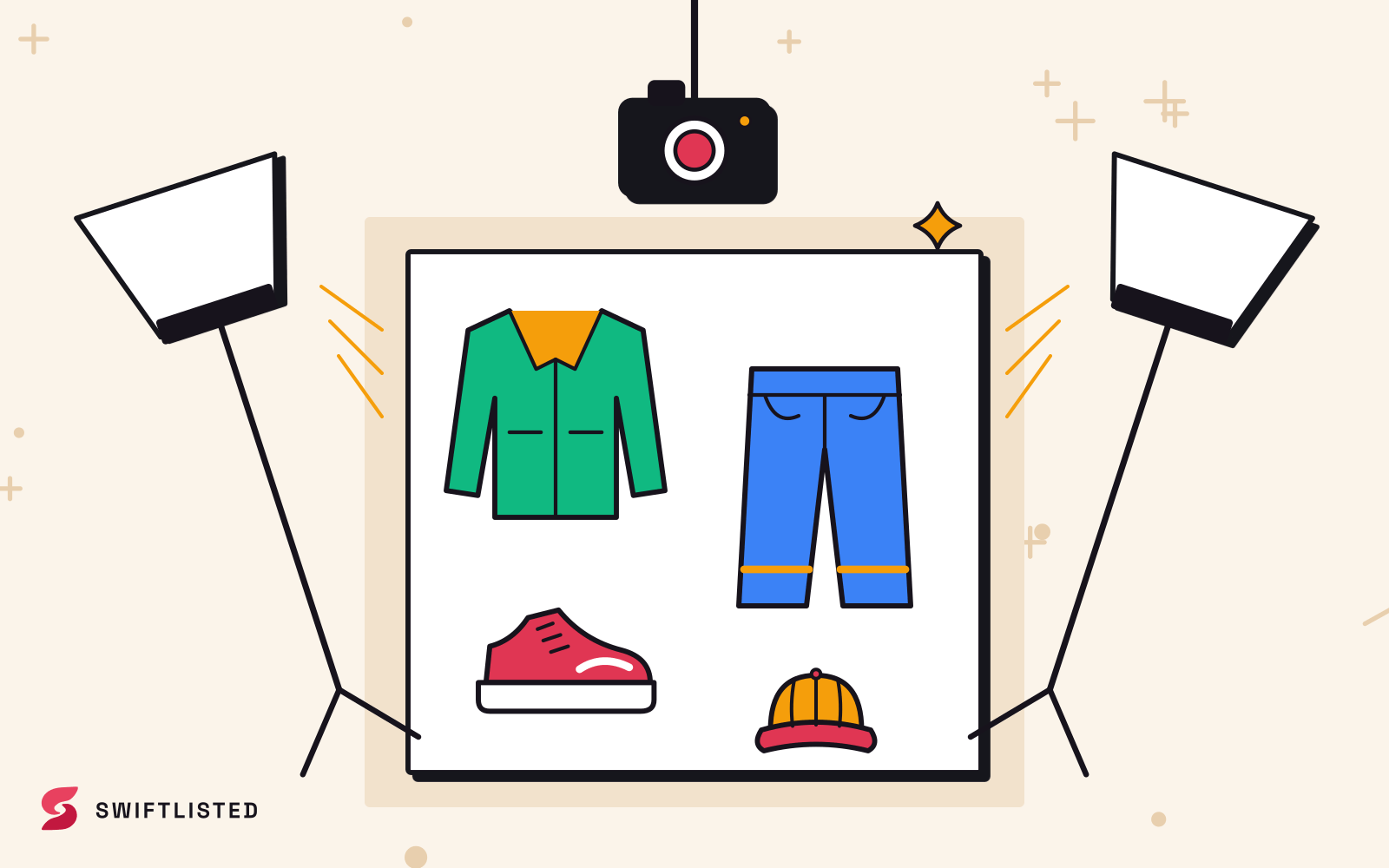
Match the style to what the garment has to show
Start with the question a buyer will ask first. For a jumper or a plain tee, the question is usually whether the colour, weight and neckline are right, and a flat lay answers that cleanly with even light and no distortion. For a wide-leg trouser or a maxi skirt, the question is how it hangs, and a flat lay flattens exactly the thing they need to judge; a hanger shot or a model shot does that job better.
Structured items such as blazers, leather jackets and tailored coats often look best on a hanger against a plain wall, because the shoulder line and lapels show their shape. Fitted or stretchy pieces, including bodycon dresses and athleisure, are where a model adds real information, since buyers want to see how the fabric sits across the body.
Shoes and bags are a special case. Flat lays show the sole, the toe and the overall shape clearly, and a single three-quarter angle usually does more than a styled set.
Know what each style costs you in buyer confidence
Flat lays are quick and consistent, and they make a batch of similar items look like a tidy catalogue. Their weakness is that they can hide fit and make a garment look smaller or boxier than it is, so buyers ask more questions about measurements. Hanger shots show shape and length honestly but need a clear wall and an even light source, and a cluttered room will undermine them. Model shots carry the most information on fit, but they are the slowest to produce, they need consent and a consistent model if you shoot repeatedly, and they can cost you a sale if the model's size or height is not stated alongside them.
The trade-off to accept plainly: a model photo that makes an item look good can also make a buyer expect a fit it does not deliver. Always pair a model shot with the model's height and the size worn, and a flat lay or hanger shot with measurements.
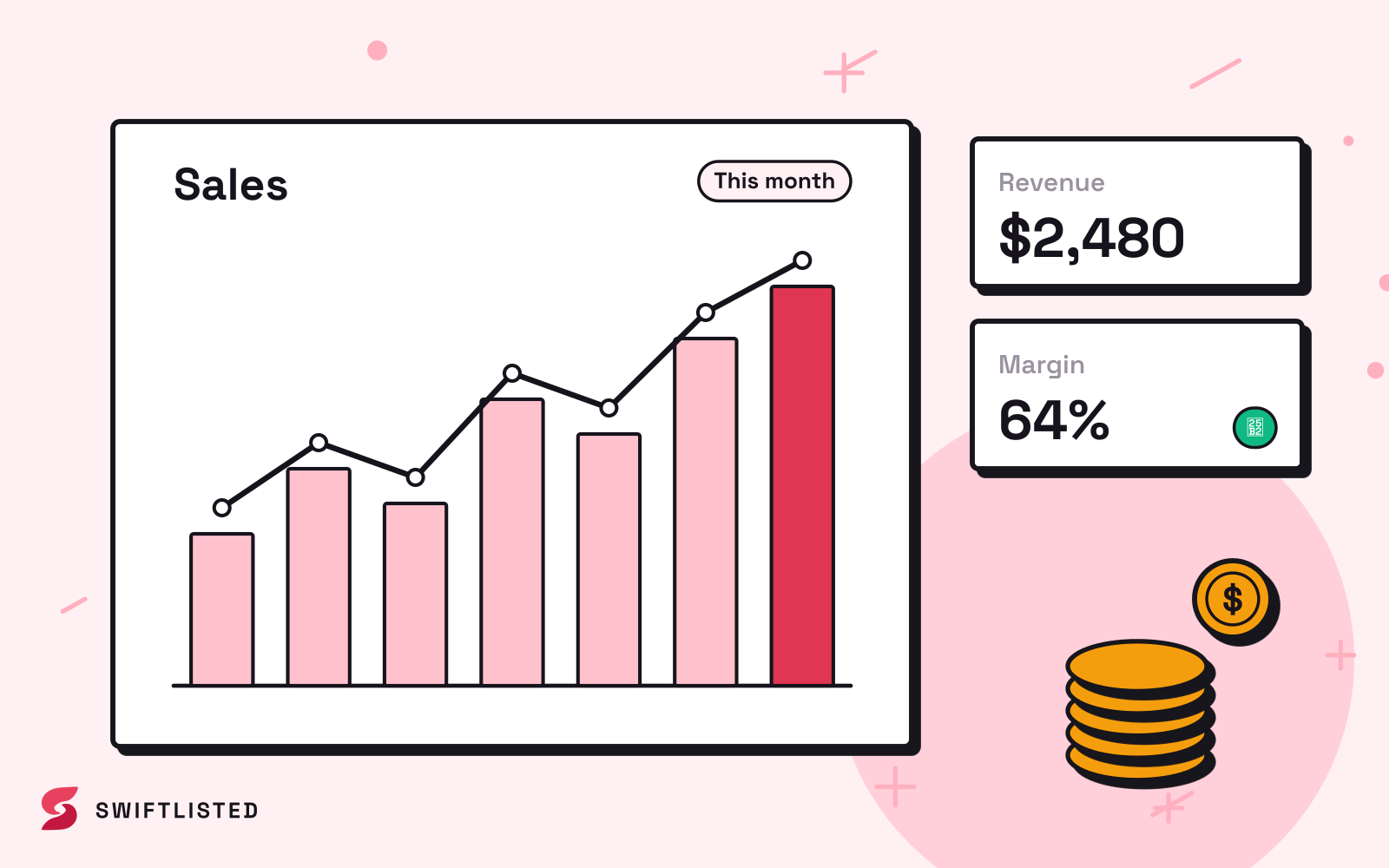
Think about which marketplace the buyer is on
Buyers do not all scroll the same way. Marketplaces built around styling and discovery tend to reward lifestyle and model imagery because shoppers browse for a look, while marketplaces built around specific brands or items tend to reward clean product shots because shoppers search for an exact piece. Vinted and Depop buyers, for instance, are often browsing by look and by size, so a mix of styled and plain shots helps. Grailed and eBay buyers are frequently hunting a specific item or brand, so a clear flat lay or hanger shot with the tag visible tends to serve them well.
These are tendencies, not rules, and they shift as the platforms change. Check each marketplace's current guidance on photos and on any image requirements, because policies differ by marketplace and change over time.
If you list the same item on several marketplaces, you can use the same set of photos everywhere so your stock stays consistent. Where a single marketplace clearly favours a different style, it is worth keeping a second set for that platform rather than forcing one set onto all of them.
A routine you can set up today
Pick a default for each garment type and write it down. For example: knitwear and basics as flat lays, structured outerwear on a hanger, fitted dresses with a model, footwear and bags as flat lays. Then shoot one item of each type in your default style and check how it looks in your own inventory grid next to the rest of your stock. If the set looks uneven, change the style, not the lighting.
Whatever style you choose, always photograph the brand and size tag clearly. It is the single biggest help to accuracy when a tool drafts the listing, and it saves you correcting the brand and size by hand. Keep backgrounds plain and light even, and shoot front and back where the item has detail on both sides.
Be straight about the risk of automation here. Photos are a first draft for AI-generated listing fields, not a final answer. Mainstream brands and sizes are usually read well; unusual vintage and unbranded pieces are less certain, and a styled photo with a busy background can confuse grouping. Review every draft before it posts. Swiftlisted lists through a Chrome extension on a desktop or laptop for Depop, Vinted, Grailed, Whatnot and Facebook Marketplace, so the photo and review step happens on your computer, and listing does not run from a phone.
- Choose one default photo style per garment type and write it down
- Use the same style within a marketplace so your stock looks consistent
- Photograph the brand and size tag clearly on every item
- Keep backgrounds plain and light, and check drafts before listing
Common questions
- Are model photos worth the extra effort for resale?
- Sometimes. They help most on fitted or stretchy garments where buyers need to see how the fabric sits. For simple basics, a clean flat lay often does the job at a fraction of the effort. Always state the model's height and the size worn alongside the photo.
- Do hanger shots work for knitwear?
- Usually not as well as flat lays. Knitwear can stretch or sag on a hanger and lose its shape, so a flat lay shows the colour and texture more reliably.
- Should I use different photos for each marketplace?
- Not always. Many sellers reuse one set for consistency. If a particular marketplace clearly favours a different style, a second set for that platform can be worth it. Check each marketplace's current photo guidance, as it differs and changes.
- Does the photo style affect how the AI drafts my listing?
- Yes, indirectly. Clear tags, plain backgrounds and good light give the AI more to work with. Busy styled backgrounds can make brand and size detection less reliable, so you should check the draft fields carefully.
List once, sell everywhere
Swiftlisted photographs, describes and crosslists your stock across every marketplace you sell on — then delists it everywhere when it sells.
Start free trial