 Swiftlisted
Handling "Not as Described" Claims as a Reseller (and Writing Listings That Stop Them)
When a buyer opens a not-as-described claim, the most useful thing you can do in the first hour is slow down, read what they actually said, and reply with evidence rather than emotion. Most claims are won or lost on the photos and wording you already published, not on the message you send back. This guide covers how to respond today, what to check, and how to write listings so the next claim is less likely. Marketplace rules on claims, returns and fees differ by marketplace and change over time, so check your marketplace's current buyer protection and seller policy before acting on anything here.
Read the claim before you reply
Open the claim and work out exactly what the buyer is saying. Are they saying the item is damaged, the wrong size, a different colour, a fake, missing parts, or simply not what the listing showed? Each of these needs a different response. A buyer who says the photos showed a stain that is not there is making a different claim from one who says the stain was never mentioned.
Do not answer the first sentence and miss the second. Buyers often include the detail that decides the case, such as a measurement they took or a photo of a tag, further down the message. Note the date the item was received, the date the claim was opened, and any deadline the marketplace shows, because missing a response window can lose the case regardless of who is right.
- Write down the exact complaint in one line before you draft anything.
- Note the marketplace's response deadline and whether the claim affects your seller standing.
- Check whether the buyer has attached photos, and look at them against your own listing photos.
Gather your evidence before you respond
Pull up the listing as it was when it sold, not as it looks now. Marketplaces keep the version the buyer saw, but your own records are what you can rely on if the listing was edited after the sale. In Swiftlisted, the Activity feed and the item record show what was posted and when, which helps you reconstruct the listing exactly.
Compare every claim the buyer makes with what you published. If your listing said "light marks on the hem" and the buyer reports a large mark, you have a different problem from one where your listing said nothing about marks at all. Be honest with yourself about which it is. Photograph the item again in the same condition it was packed in if you still have it, and keep the packing photos you took before posting.
- Keep the original listing photos, the description text and the condition grade as they were at sale.
- Keep your packing and dispatch photos, including any shot of the item before it went in the bag.
- Save the tracking history and delivery confirmation.
- Record the measurements you took yourself, with the method you used.
What to say in your reply
Keep the reply short, factual and polite. Restate what the listing said, answer the specific complaint, and say what you propose. If the listing was accurate, say so calmly and point to the exact photo or sentence. If you made a mistake, own it plainly. Buyers and marketplace reviewers both respond better to a seller who acknowledges an error and offers a fair remedy than to one who argues every point.
Offer a resolution you can actually deliver. Depending on the marketplace and the claim, that may be a partial refund, a return, or a replacement if you have one. Do not promise anything your marketplace's current policy does not allow you to do, and do not agree to move the transaction off-platform, which most marketplaces prohibit and which removes your protection as well as the buyer's.
- Quote the listing sentence or photo that answers the complaint, rather than paraphrasing it.
- Acknowledge a genuine error in one sentence, without groveling.
- Do not agree to payment or returns outside the marketplace's own process.
- Keep every message on-platform so there is a record.
Write listings that make the next claim less likely
Most claims come from a gap between what the buyer imagined and what the listing said. Close that gap with specifics. Write the measurements that matter for the category, state the condition in plain terms, and describe every flaw you can see, including ones that look minor to you. A buyer who reads "small snag inside the left cuff, not visible when worn" is far less likely to claim than one who reads "good condition".
Photograph the things buyers ask about: the brand and size tag, any label, the fabric up close, the wear points, the inside, and the base of shoes or the bottom of bags. Phone photos in natural light with a plain background are fine, but the detail shots matter more than the lighting. Where an item has a known fault, show it. A photo of the fault protects you more than any sentence in the description.
- Give flat measurements in centimetres or inches with the method stated, such as pit to pit or waist laid flat.
- Name each flaw and where it sits, rather than summarising it as "minor wear".
- Describe the colour as it looks in daylight and mention if it reads differently under artificial light.
- Check the size tag and the description agree before you publish.
- State whether the item is authentic-checked, unchecked or from a known source, and do not imply a check you did not do.
Where automation helps, and where it can go wrong
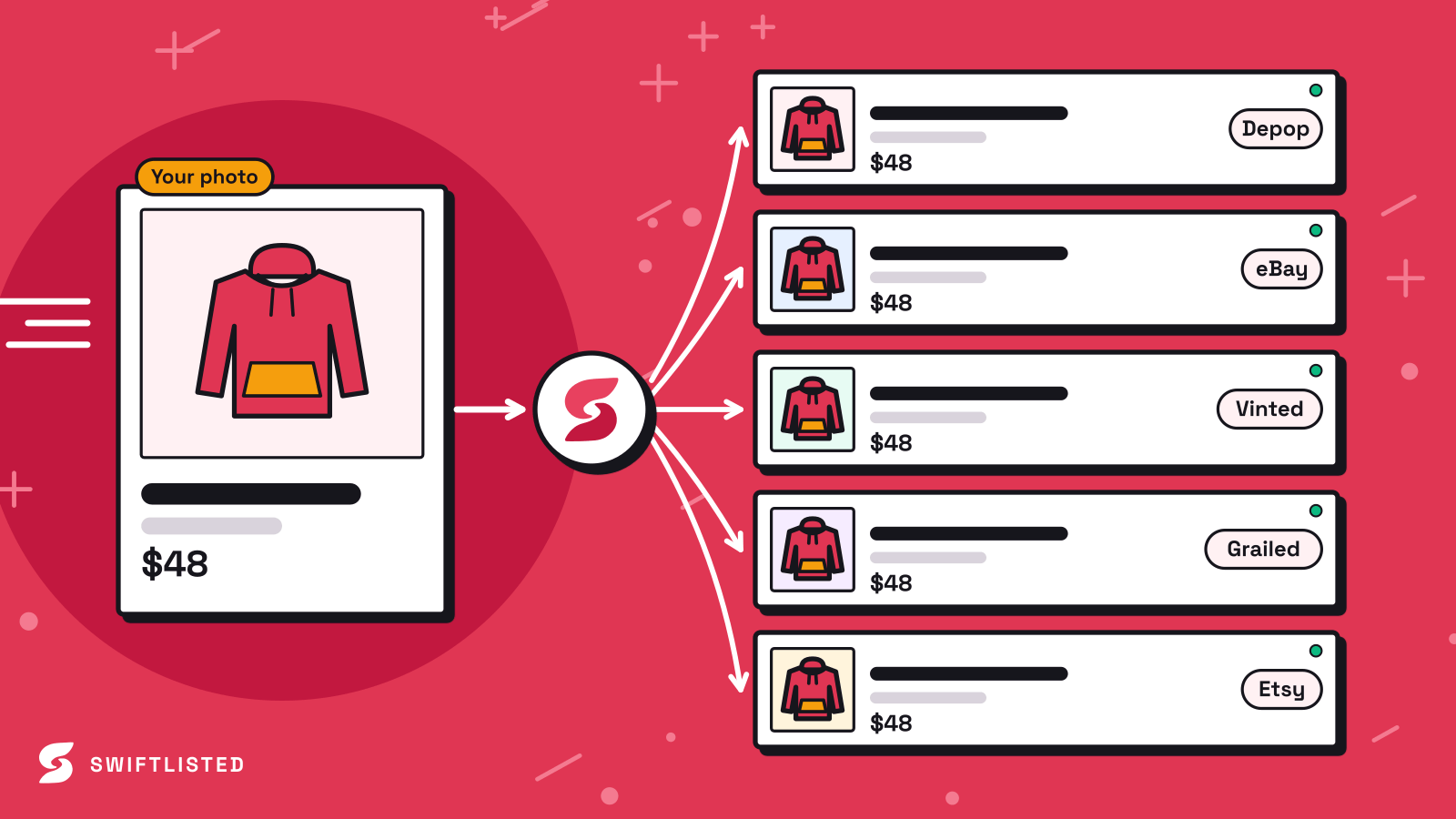
Swiftlisted drafts the listing fields from your photos, including title, description, brand, size, condition and price, then posts them to the marketplaces you choose. That speeds up posting, but it creates a specific risk: an AI draft can misread a size, brand or condition, and a crosslisted item carries that error to every marketplace at once. Before you crosslist, read every field of every draft against the item in your hand. Automation does not check the item for you.
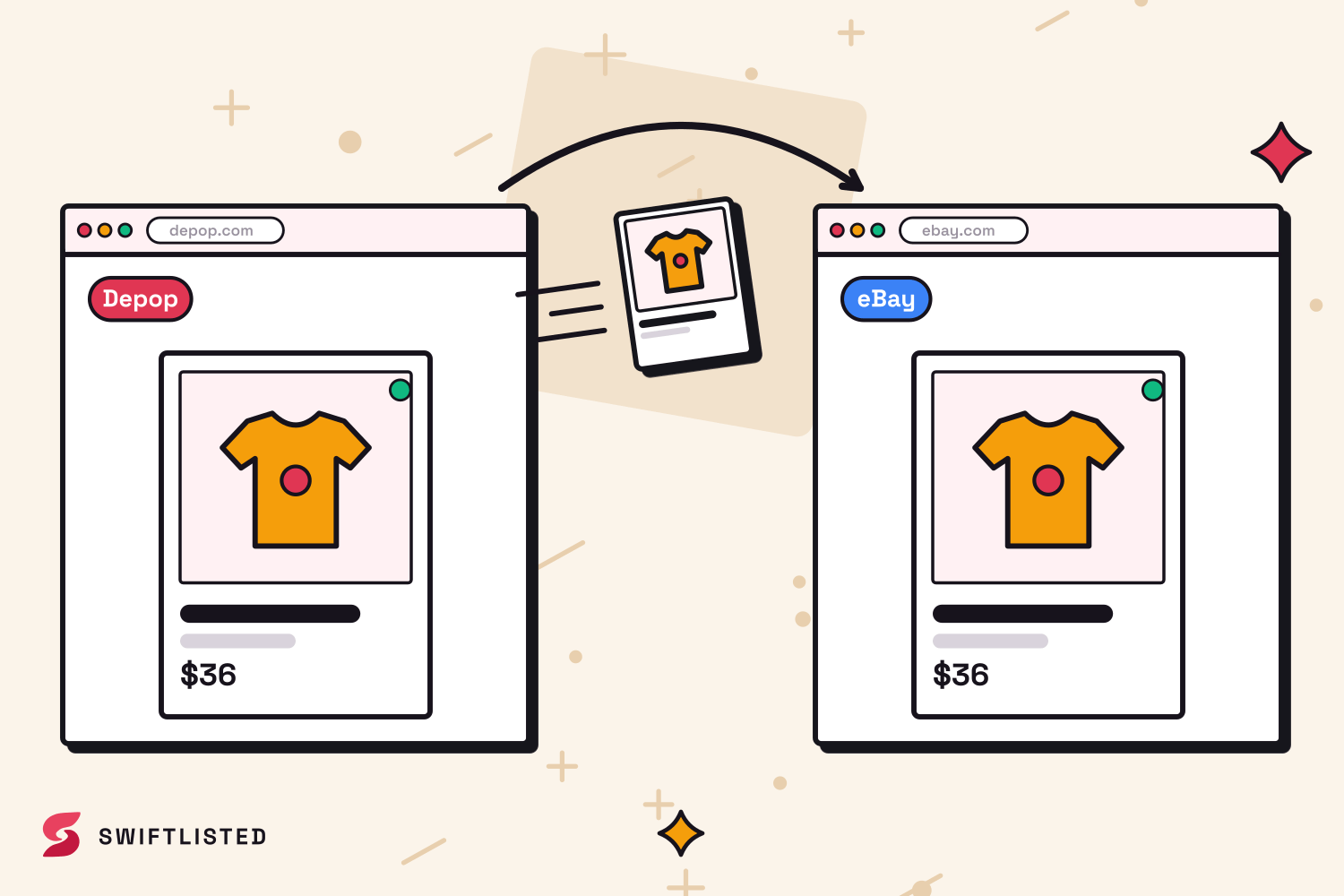
Posting to several marketplaces also means a sold item must come down everywhere else quickly, or you risk selling it twice. Swiftlisted detects sales and delists elsewhere, but detection depends on the marketplace and its connection. eBay and Shopify notify it of orders directly, while the other marketplaces are checked on a schedule, so a sale can take longer to register there. Facebook Marketplace is checked hourly. Check that a sold item has been removed from every marketplace yourself, particularly where you have listed Vestiaire Collective, which has no sold detection and needs you to mark the sale manually. Automation also depends on your browser session: the Chrome extension acts inside your signed-in browser, so if you are signed out of a marketplace, listings to it will stop and tell you rather than post. Keep the extension updated and check the Activity feed after every batch.
- Review every AI-filled field before you crosslist, especially size, brand and condition.
- Check the sold item has come down on every marketplace, not just the one it sold on.
- Confirm the extension is connected and you are signed in to each extension marketplace before a bulk run.
- Do not bulk-list far more items than you can check in one sitting.
Common questions
- Can a seller lose their account over not-as-described claims?
- It depends on the marketplace and how often claims are upheld against you. Marketplaces set their own seller standards and enforcement, and those change, so check the current seller policy on each marketplace you sell on. Responding quickly and keeping good evidence reduces the risk, but it does not remove it.
- Should I accept a return even if I think the item was as described?
- Often a return is the cheaper route than a dispute, but it is your decision and depends on the marketplace's process and the buyer's claim. If you accept, make sure the return is handled through the marketplace so the refund and item tracking are recorded.
- What if the buyer sends a photo that looks nothing like my item?
- Ask the buyer to confirm the item and order details, and compare their photo against your dispatch photos. Mention any differences factually in your reply and let the marketplace review the evidence. Do not accuse the buyer of deception in writing.
- Does crosslisting make claims more likely?
- It can, if inaccurate details are copied across every marketplace before you check them. Crosslisting itself is not the cause; unchecked listing details are. Read each draft against the physical item before posting.
- How do I stop a sold item from being sold twice?
- Use a sold-detection tool and check every marketplace after a sale, rather than trusting one. Pay particular attention to marketplaces that are checked on a schedule, and mark sales manually on any marketplace that does not detect them automatically.
List once, sell everywhere
Swiftlisted photographs, describes and crosslists your stock across every marketplace you sell on — then delists it everywhere when it sells.
Start free trial